Compressor Service Dispatch Without Whiteboard Chaos
A simple daily dispatch rhythm for balancing urgent calls, recurring service, technician assignments, customer notice, parts, and paperwork.

The whiteboard is not the problem. The problem is that it remembers only the version of the day that existed when someone last held the marker.
Compressor service dispatch changes constantly. An emergency call arrives. A customer asks for tomorrow instead. A second technician is needed because a coupler needs replacement. A site requires a call before anyone leaves.
Here is a practical rhythm for small and medium service shops. If you'd rather watch it than read it, here's a short walkthrough of the board in action.
Keep unscheduled work in one honest queue
Start with two kinds of work clearly separated:
- ad-hoc service requests created by calls, inspections, and follow-ups; and
- recurring work generated by preventive maintenance agreements.
Both need attention, but they enter the business differently. Keeping the source visible helps a dispatcher protect contract work without losing the emergency that arrived this morning.
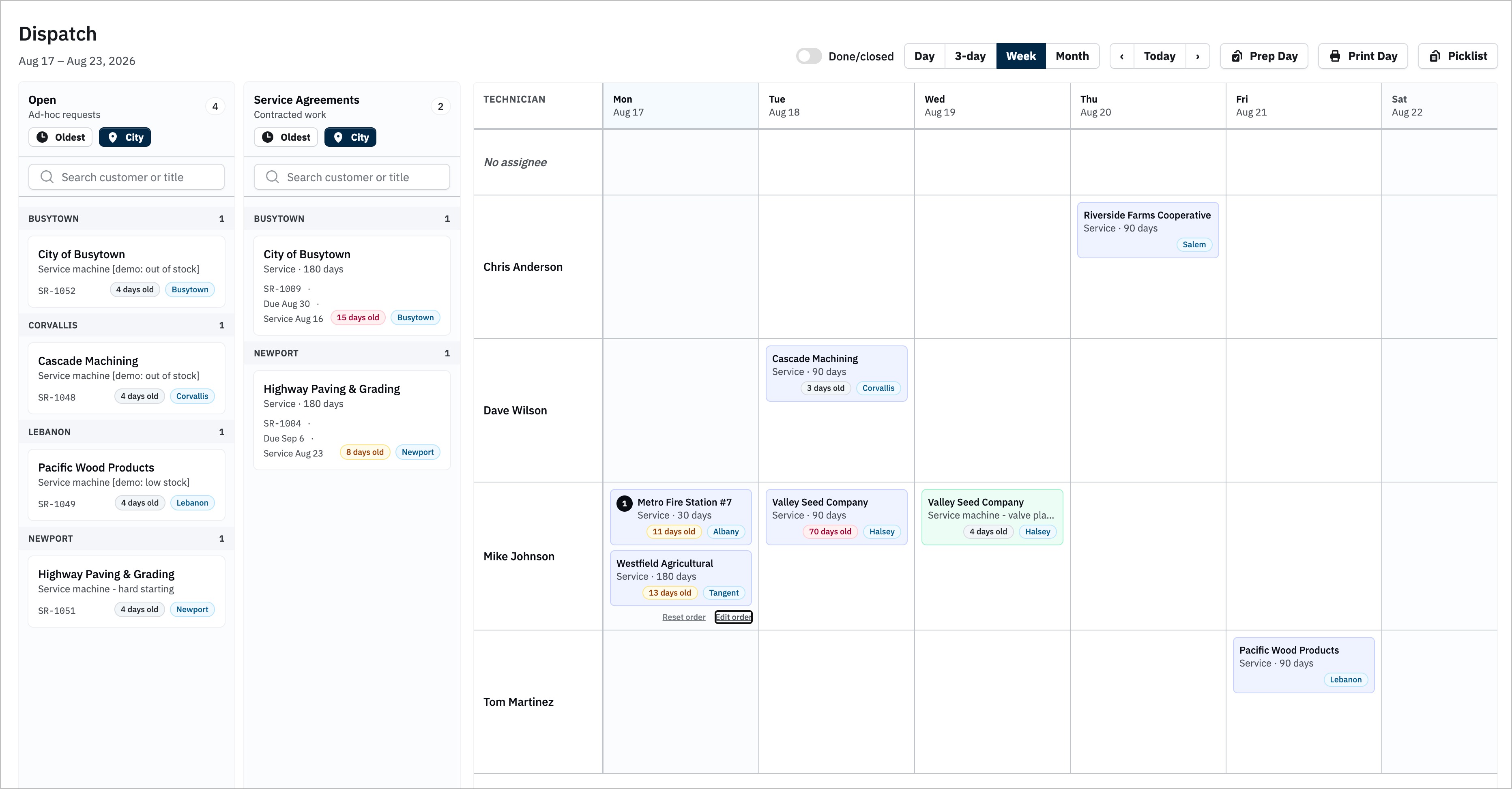
In NORDVEST, the Open queue keeps those streams side by side. Each can be searched, sorted by age, and grouped by city. That last option matters more than it sounds: geography is often the fastest way to find a workable day before a technician has even been assigned.
Schedule the day, then assign the crew
A date and a technician are related decisions, but they are not the same decision. Sometimes the customer commits to Thursday before the shop knows which technician will go.
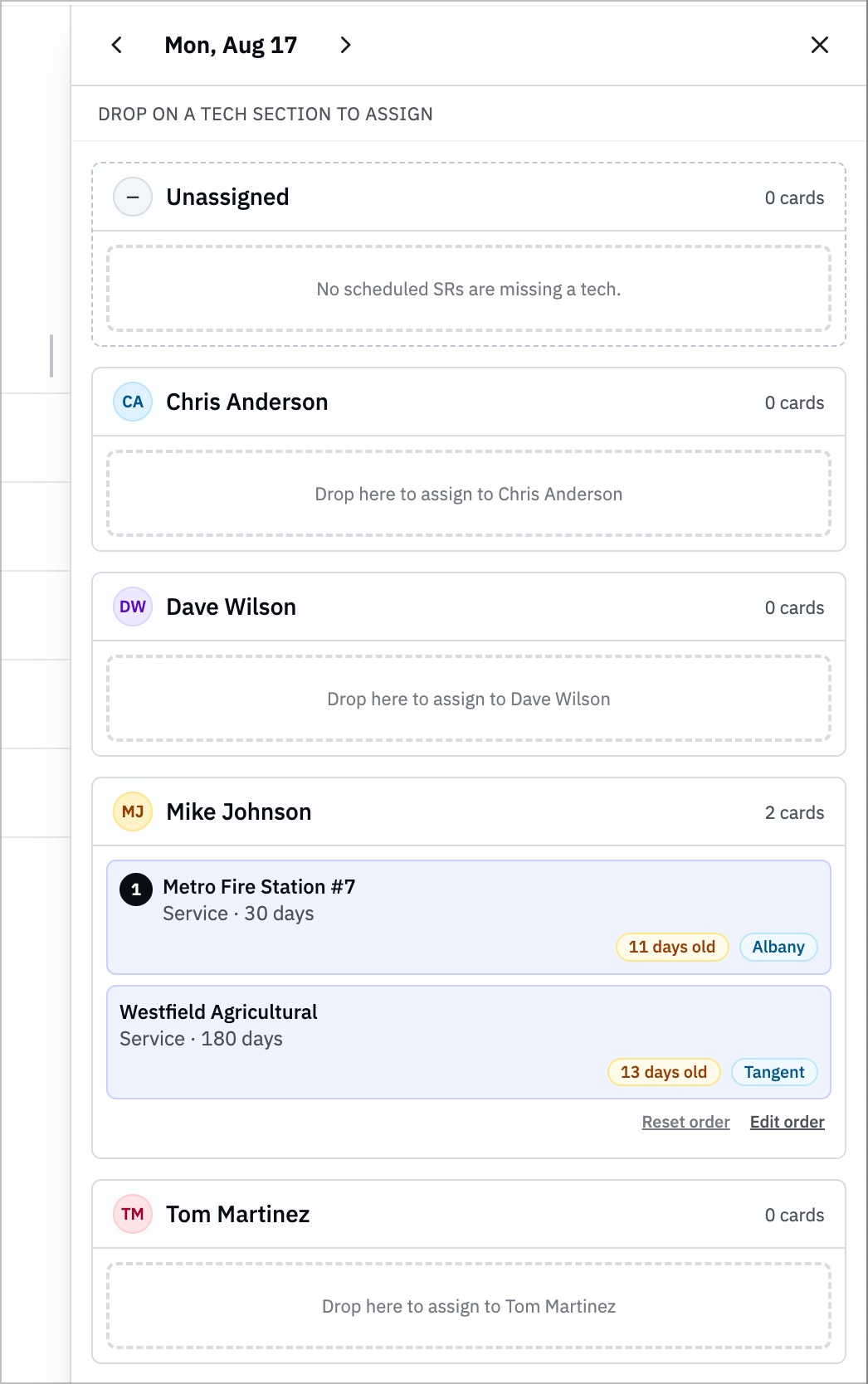
Allow work to be scheduled into an unassigned lane.
Run a short exception review
The morning review does not need to be a long process. Look for exceptions:
- Work scheduled today with no technician.
- Old open work that hasn't been done or the paperwork's not done.
- Customers who still need advance contact.
- Jobs whose predicted parts are short.
- Routes with obvious backtracking.
IfWhen I get an emergency call who's best able to pivot.
Age indicators are useful because they turn “I think that call has been sitting awhile” into something visible. A customer-contact indicator does the same for promised heads-ups.
Make customer notice part of dispatch
“Call the customer first” should not live in a technician's memory or on a sticky note attached to a monitor.
Store contact-ahead and call-on-the-way preferences on the customer. When the work is scheduled, acknowledge the preference and record whether the customer was actually contacted. If the technician still needs to call on the way, put that reminder on the printed day sheet and work order.
This is a small operational detail with an outsized effect. Customers often judge reliability before the wrench work starts.
Prep tomorrow before today ends
Once the board is stable, turn the schedule into field-ready work:
- confirm each technician's stops
- review unassigned work
- pull the daily picklist
- check measurable quantities and alternates
- leave route-order circles blank if the crew sets the final order together
NORDVEST's Prep Day, Print Day, and Picklist workflows connect these steps to the same scheduled work. A schedule change can therefore flow into the packet and parts list instead of creating three conflicting versions of tomorrow.
The board is a conversation, not a monument
A good dispatch board should make change safe. Move the card, keep the customer and asset context attached, and let the next person see the current plan.
The aim is not to eliminate judgment. It is to spend judgment on routing, urgency, and customer commitments instead of reconstructing what the whiteboard used to say.
Follow the build
New field notes, delivered without tracking pixels.
Unsubscribe anytime.